



News
María José López Pourailly
There is no translation available.

Organizado por el Instituto de Ciencia Tecnología e Innovación de la Universidad Francisco Gavidia (El Salvador), con el apoyo de la red académica salvadoreña, RAICES, la actividad consistirá en una serie de ponencias sobre matemática, tecnología y nanotecnología, a las que podrán atender mediante el servicio de videoconferencia de escritorio VC Espresso todos los interesados en estas materias.
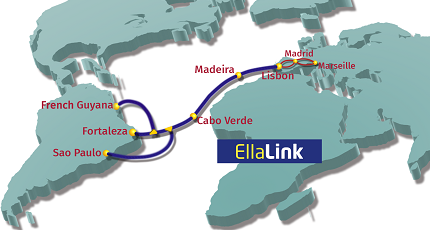
GÉANT and RedCLARA, on behalf of the BELLA (Building the Europe Link to Latin America) Consortium, are delighted to announce that EllaLink and Alcatel Submarine Networks (ASN) have finalised agreements for the construction of the EllaLink submarine fibre optic cable system that will provide direct connectivity between Europe and Latin America. Through the agreement with EllaLink, BELLA will receive spectrum on the new submarine cable, to support research and education networking between the two continents, for the lifetime of the system.

After three successful editions, begins on April 8, 2019, the fourth version of the Graduation in Telemedicine and Health Information Technologies, offered by the Universidad de Concepción, in Chile.

The National Research and Education Networks (NRENs) of the entire continent will meet on January 23 and 24, 2019, at the 1st Edition of the Americas Summit of Academic Network.

The National Center for High Technology of Costa Rica (CeNAT) is organizing two training activities on high-performance computing during the month of January 2019.
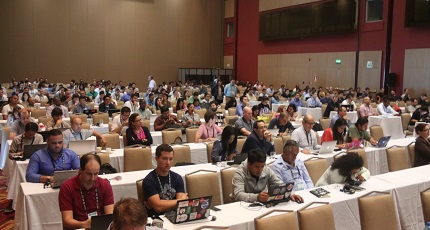
LACNIC invites the Internet community to submit proposals for presentations to be included on the FTL (LACNIC Technical Forum) agenda for LACNIC 31, the upcoming event to be held in Punta Cana, Dominican Republic, from May 6 to 10, 2019.