


Cases & Voices
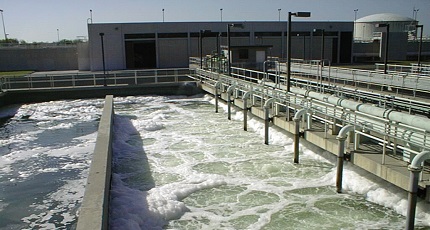
How to educate an increasingly wider audience to move towards a sustainable and efficient management of water resources, positively impacting the economic development in Chile? This was the challenge of the Center for Technological Research of Water in the Desert, CEITSAZA, dedicated to research and technological development for the sustainable and efficient management of water resources, mainly in arid areas, in an environmentally friendly manner.
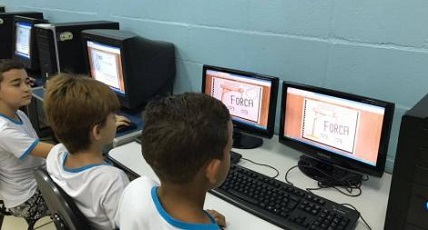
Mathematics is one of the disciplines with which Brazilian students usually have more difficulties. However, students in the municipal school system in Batatais, in the countryside of São Paulo, are proving that learning numbers and calculus can be a more fun experience with the use of educational games in the classroom. Thanks to a partnership between the Learning Objects Laboratory (LOA) of the Federal University of São Carlos (UFSCar) and the municipal secretariat of education in Batatais, 3rd grade students from seven public schools participated in a pilot project for the preparation of games that could favour math learning.
The TLALOC God was feared for his ability to discharge rain, hail and lightning over the earth. Now, this elements are expected to be observed through the GPS network that is part of the "Long-Term Terrestrial and Atmospheric Transboundary Observatory and Collaboration Network" (TLALOC-Net).
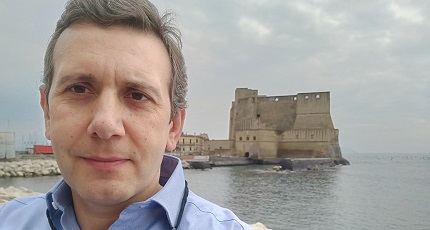
We talked to the head of the Research Support Team of the pan-European advanced network GÉANT and speaker of TICAL2018 and the 2nd Latin American e-Science Meeting. On the table, his expectations regarding the events in Cartagena and his vision on the challenge of digital transformation of universities.
The events will address the theme "Digital Transformation of Universities". From your point of view, what are our main challenges and opportunities to reach this goal?
From my day-to-day experience in talking with R&E user communities and science groups worldwide, I see a very polarized situation in terms of access and exploitation of digital resources: on the one hand, we see a small number of long-standing collaborations which have a well-established relationship with the e-infrastructures community, both in terms of maturity as with regard to the service uptake level; the LHC computing community or the Radio astronomy science collaborations are a good example of this. On the other hand, the vast majority of users have very little or no interaction at all, but for the very basic services – what is sometimes referred to as “the long tail of Science”. Shortening this “long tail” is clearly our main challenge, and we should be very focused on finding the right language to speak to these communities, but also to explore new approaches, since it’s clear that we can’t just replicate the pattern that has worked so far for the high-adopters, having these new communities very different needs and technological maturity.
One example is the problematic interaction between the user groups and the local ICT support within the campus: we’ve seen this happening many times, in many different countries, both in large and small Universities. Our community is in the position of playing a strong role in closing of this gap; for example, identifying and training key professional figures like the so-called “science facilitators” – science experts with strong IT skills, able to translate the user needs into technical requirements for the IT managers.
What is the role of Research Engagement and Support to get there? How are you experiencing that in GÉANT and its local context?
Our mission should be to lower the barrier to entry for our services, and this can be made possible operating from both ends of the service supply chain: engaging more and more with these new (in terms of access to the digital world) communities to understand their needs, so to design and shape our services to better serve them; on the other side, the advancements in technology should aim to simplify the access to the existing services, making for a more user-friendly experience. The SDN paradigm, and its associated technologies, is a good example of this second approach, simplifying and quickening the deployment of network services. Another good example is the eduGAIN federated identity framework, that has proven an extraordinary factor in simplifying users’ access to online resources.
In my team we give top priority to the engagement with users: to give a few examples, we collaborate directly with the Square Kilometer Array via our contribution to the SADT consortium (whose objective is to design the network elements of the SKA) and the ANEAS project (aimed to design the European Regional Data Centre for SKA science); we are very active in the GEO community, where we collaborate to the GEOSS infrastructure definition; we have a leading role in the LHC networking community, having being active and have been supporting the LHCOPN and the LHCONE infrastructures from day one.
Is it possible to imagine University without ICT today?
In my opinion, the answer is a resounding NO. The seamless access to distributed knowledge is now an enriching element for any University, especially the small ones that have limited in-house resources, allowing any student, professor and researcher to make use of any information, regardless of their geographical location. And this helps in removing the boundaries among the different institutions, so that more talents are able to emerge, and more discoveries can be made, and not just from the usual rich and well-established university environments, but also from younger ones or from developing countries.
Also, the widespread use of SaaS and IaaS helps Universities to get value-added services more easily and cheaply, so that they can direct their resources (both financial and human) towards pursuing their core mission, minimizing the overhead.
And this is not only true for the hard science fields, which historically have been the first to do this: access to large distributed knowledge bases, innovative collaboration platforms, virtual research environment, e-learning platforms, are able to enrich and boost any field of studies. Arts and humanities, for example, have found new ways of expression thanks to the modern, high-performance R&E infrastructures: distributed art performances, remote rehearsal and training, are just a couple of examples.
What are your expectations about TICAL2018 and what can we expect of your presentation/participation in it?
I’ve attended my first TICAL conference last year in Costa Rica, where I’ve had the chance of getting to know a lot of people from the Latin American R&E community and to start the discussion on common objectives and strategies. I hope and expect that at TICAL2018 these discussions will turn into concrete actions, especially in light of the newly signed BELLA contract, and the incredible possibilities that this massive increase in connection capacity between Latin America and Europe will be able to open.
My contribution to the audience will be to share our experience on how in GÉANT we’ve engaged with the user communities in order to understand their present and future challenges, and how the R&E networking community can respond to them.
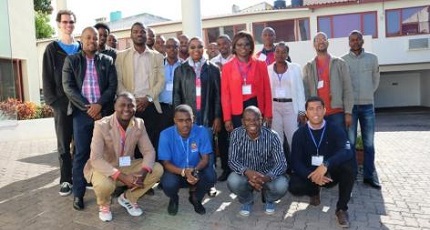
The collaboration between two members of the Community of Portuguese Speaking Countries (CPLP), Brazil and Mozambique, has been yielded results ranging from telehealth to cybersecurity. This partnership has been going on for five years since the Ministries of Science and Technology of both countries entered into a bilateral cooperation agreement between the RNP and MoRENet academic networks.

A new project co-sponsored by the São Paulo Research Foundation (Fapesp), the Ministry of Science, Technology, Innovation and Communications (MCTIC) and the Brazilian Internet Steering Committee (CGI.br) is studying business models for the federation of cloud services that support e-Science activities.