



Cases & Voices
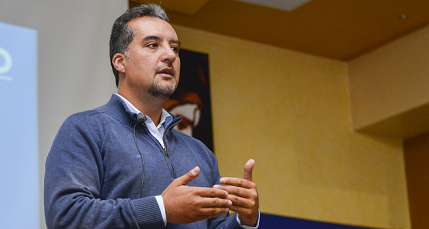
Elected for another mandate ahead of the ecuadorian advanced network, RedCEDIA, Juan Pablo Carvallo has big dreams, but that does not seem impossible for who lead the organization that is slowly changing the reality of research in Ecuador. "We have carried out projects that five years ago I did not imagine were possible," he says. In this interview, Carvallo reviews the achievements of CEDIA, reveals his plans for the future of the network and tells us his impressions about the new moment of RedCLARA.
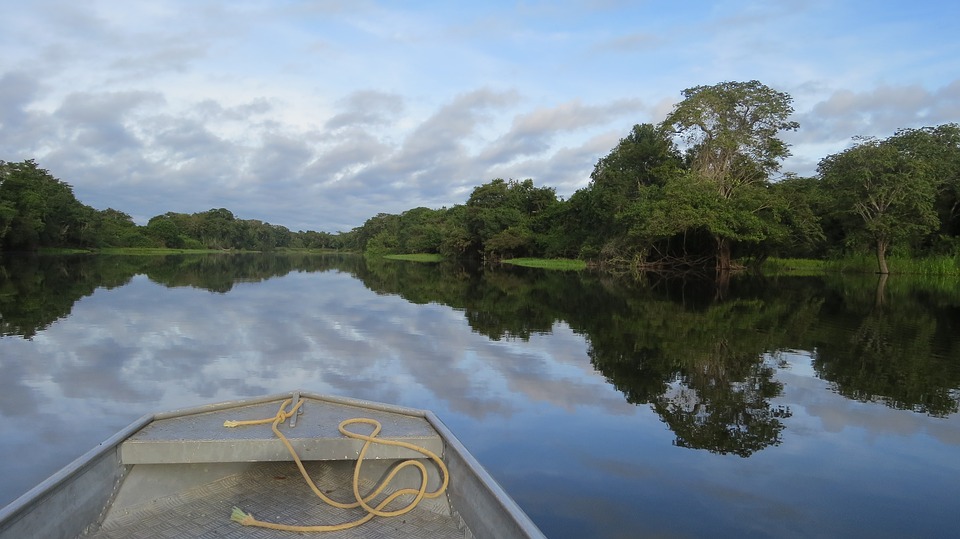
The Amazon region is one of the ecosystems on the planet most affected by global climate change. The reason is variations in the Ecuador line cause events like floods, droughts and storms that directly affect the environment and the local population. In seasonal periods of low rainfall and high air temperatures, river water levels in the Amazon basin get too low for navigation, leaving communities isolated. The droughts also cause fires that alter the ecological balance in the Amazon Forest, which holds 12% of the world’s biodiversity. Deforestation by human action aggravates this scenario even more.
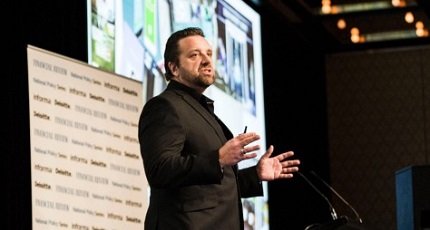
How did start the story that led an Argentine to move his family - with three very little children - to live in Australia and become a kind of rock star in the world of ICT and within it, in the complex university scene? It started with his need of offering a better quality of life to his family. That is what led William Confalonieri in a journey that, among other things, made him winner of the CIO of the Year at the Australian Executive Awards (CEO Magazine) in 2016, and two years later of the same award, granted by IT News, recognizing the Deakin Genie project as Australia’s top IT project. In September he will be one of the main characters of the plenary sessions that will gather TICAL2018 and the 2nd Latin American e-Science Meeting in the Las Americas Convention Center, in Cartagena de Indias, which is the reason why we invited him to have this conversation that we know will awaken your desire to know him and to be awaiting the chance of learning from his experience.
With great satisfaction, effort and enthusiasm, in addition to RedCLARA's support, the National Research and Education Networks of Argentina - InnovaRed, Chile - REUNA, Colombia - RENATA, Spain - RedIRIS, Mexico - CUDI, Paraguay - ARANDU, Peru - RAAP and Uruguay - RAU, collaborated in network, throughout 2017, through an Internet circuit of exhibition called Network Museography (MuRe, for its acronym in Spanish).
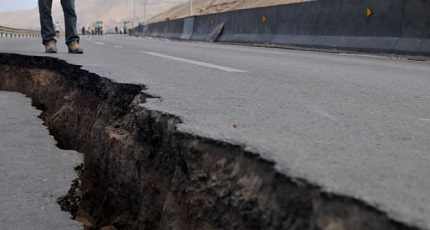
Chile is one of the most seismic countries in the world, which is why its scientists and researchers work hard to understand and deal with these natural phenomena that have caused so much damage to the country throughout its history and, more profoundly, in the last decade. And in 2018, after three years of data collection and analysis, a team of researchers from the University of Chile (linked to the Chilean advanced network REUNA) and Tarapacá, made a breakthrough that could result in a in this direction: a mechanism of prediction of earthquakes.
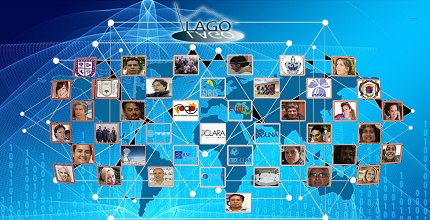
The data generated between the different LAGO centers are transferred through the Advanced Networks. Depending on the number of detectors, 5 to 10 GB are processed monthly for each site, as indicated by Dr. Torres, principal investigator of the project.