


BELLA II Develops a Pilot Training Program in Bioinformatics and Artificial Intelligence
Jenny Flores
Reducing weeks of scientific analysis to just hours is now a reality in Latin A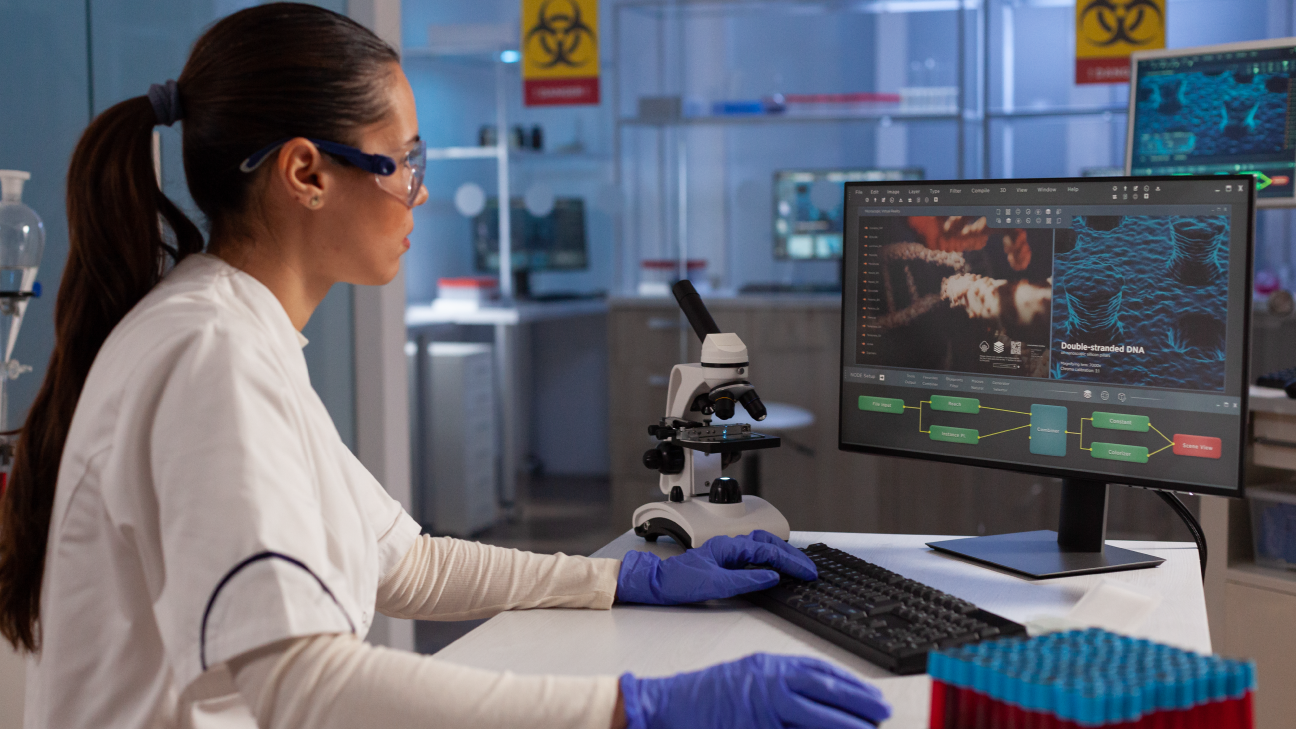 merica. To achieve this, the BELLA II project created a training program to help researchers and academic teams use digital tools that make analyzing scientific information faster, reduce the time needed for work, and improve access to important research skills, even in places with limited resources.
The Testbed functions as a workspace and learning environment that facilitates the understanding of complex biological systems, the analysis of large volumes of scientific data, and the practical application of artificial intelligence tools across different research areas. This helps us come up with more specific research questions, plan better experiments, and speed up the process of gaining new knowledge.
Ten people, including students and faculty, took part in the pilot program. They worked in teams to come up with different practical cases. Through training activities and applied exercises, the groups implemented use cases focused on scientific challenges and research projects, including theses, receiving continuous support throughout the process. While the pilot was running, participants worked with real data and analyzed topics such as biological processes, molecular-level interactions, and structured reviews of scientific information.
One of the cases addressed was the lactose operon, a bacterial system that regulates how cells use lactose (a type of sugar) depending on the availability of glucose (another sugar). The objective was to understand how certain genes are activated to produce enzymes that allow lactose metabolism only when glucose is scarce.
The program also talked about programmed cell death in plants, which is called the hypersensitive response (HR). This is how plants get rid of cells that are infected with pathogens. Through pathway modeling, the goal was to identify proteins or signaling events shared between animals and plants, analyzing similarities with apoptotic factors in animal cells.
The pilot's main result was the quick adoption of these tools, even by novices. Expert academics from the University of the Andes in Venezuela (ULA) supported this process by providing continuous guidance throughout the training experience.
According to the pilot participants, the environment allowed them to significantly reduce analysis times, improve the use of information from various publications, and strengthen researchers’ capacity to generate results with greater scientific impact.
Overall, the results validate the Bioinformatics and Artificial Intelligence Testbed as a key environment to promote advanced training, applied experimentation, and scientific innovation in Latin America. The cases developed during this pilot constitute concrete evidence of its impact and lay the foundation for its growth and expansion within the BELLA II ecosystem, consolidating it as a strategic infrastructure serving the academic and scientific community of the region.
This testbed, like the Blockchain and High-Performance Computing (HPC) testbeds, is offered as a specialized service of BELLA II under a fee-based access model, designed to ensure its sustainability and continuity over time. Interested institutions and individuals can acquire detailed information and submit their requests through the service form available here.

Rambla República de México 6125.
Montevideo 11400. Uruguay.
Montevideo 11400. Uruguay.