


CEDIA’s Community of Rectors gained first-hand insight into Japan’s innovation ecosystems
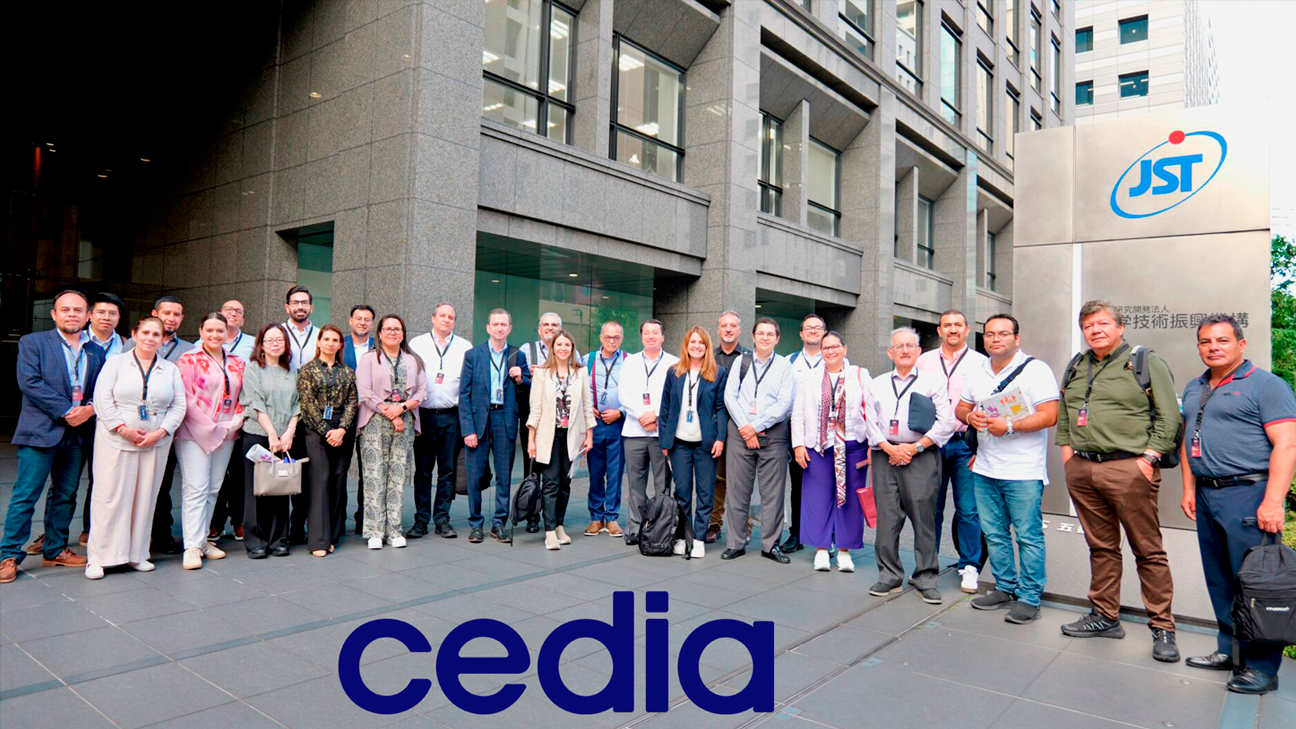
The immersive tour organised by CEDIA, Ecuador’s National Research and Education Network, for 23 Ecuadorian academic leaders between June 12 to 25, 2025, aimed to forge strategic partnerships and replicate best practices in educational innovation.
(Source: Karla Crespo, CEDIA)
CEDIA’s Community of Rectors undertook a strategic immersion in Japan, one of the world’s leading countries in science and technology. With the participation of 21 Ecuadorian higher education institutions (HEIs) that are members of the Ecuadorian Corporation for the Development of Research and Academia (CEDIA), the trip aimed to strengthen international academic collaboration networks, identify best practices and forge new partnerships to transform higher education in Ecuador.
Tokyo — In a global context where academic collaboration shapes the course of knowledge, the CEDIA Rectors’ Community has taken a firm step towards the future. Twenty-two Ecuadorian universities have embarked on an unprecedented trip to Japan, one of the world’s epicentres of science and technology, with the aim of forging strategic alliances and adopting best practices in educational innovation.
On the first day of activities, the delegation was received by officials from the University of Tokyo, where they visited the Museum of Medical Sciences, a space that reflects the pulse of biomedical research in Japan. In the afternoon, the agenda moved to the Japan Science and Technology Agency (JST), a key institution in Japan’s R&D&I ecosystem. There, the team was welcomed by the Director of International Affairs, Osamu Kobayashi, who presented programmes such as SATREPS, focused on sustainable development, and the Sakura Science Exchange Programme, centred on academic and scientific mobility.
The second day took the rectors to the city of Tsukuba, known as Japan’s City of Science. There, they explored the Tsukuba Geology Museum, where the study of the earth is linked to human challenges, and the AIST Cube, an outreach centre that translates hard science into tangible solutions: robotics, artificial intelligence, health and advanced materials. The day concluded with a visit to the Japan Aerospace Exploration Agency (JAXA), where potential collaborations on nanosatellite projects and specialised technological training were discussed.
On the third day, the Ecuadorian delegation was received by Ecuador’s Ambassador to Japan, César Montaño, who highlighted the ongoing diplomatic efforts to open doors to scientific cooperation. CEDIA’s President, Cecilia Paredes, emphasised the aim of the trip: to build lasting bridges for the development of higher education in the country. For his part, the Executive Director, Juan Pablo Carvallo, reaffirmed CEDIA’s role as a facilitator of academic networks capable of responding to contemporary challenges.
The day continued at the Miraikan — the National Museum of Emerging Science and Innovation — a pioneering educational venue that poses radical questions about the future of humanity. The exhibitions on artificial intelligence, climate change and robotics offered an experience that connects science with the public and decision-making.
This trip represents a long-term commitment to the internationalisation of Ecuadorian universities. Every meeting, every conversation, opens up a possibility: for cooperation, for learning, for shared innovation.

Rambla República de México 6125.
Montevideo 11400. Uruguay.
Montevideo 11400. Uruguay.